
Introduction
Waste management has become one of the most pressing environmental challenges of the modern world. Every day, households generate large amounts of waste, much of which ends up in landfills or pollutes oceans and natural ecosystems. Reducing household waste and improving recycling practices are essential steps toward building a more sustainable future.
Understanding the Waste Problem
The rapid growth of population and consumption has led to an increase in waste production globally. Many everyday items such as plastic packaging, food waste, and disposable products contribute significantly to environmental pollution.
When waste is not managed properly, it can lead to:
- Soil contamination
- Water pollution
- Air pollution from burning waste
- Harm to wildlife and ecosystems
This makes waste reduction a critical priority for both individuals and organizations.
The Principle of Reduce, Reuse, Recycle
The most effective approach to waste management is the well-known “3Rs” principle:
Reduce
Reducing means minimizing the amount of waste produced in the first place. This can be done by:
- Buying only what is needed
- Avoiding single-use plastics
- Choosing products with minimal packaging
Reuse
Reusing involves finding new ways to use items instead of throwing them away. Examples include:
- Using glass jars for storage
- Reusing shopping bags
- Repairing broken items instead of replacing them
Recycle
Recycling involves processing used materials to create new products. Common recyclable materials include:
- Paper and cardboard
- Glass
- Plastic
- Metal
Composting Organic Waste
Organic waste such as food scraps and garden waste can be converted into compost instead of being thrown away.
Composting benefits include:
- Reducing landfill waste
- Producing natural fertilizer
- Improving soil quality
- Supporting plant growth
This simple practice can significantly reduce household waste while benefiting home gardens.
Reducing Plastic Waste
Plastic pollution is one of the biggest environmental threats today. It takes hundreds of years to decompose and often ends up in oceans, harming marine life.
To reduce plastic waste, households can:
- Use reusable bottles and containers
- Avoid plastic bags
- Choose eco-friendly packaging
- Support brands that reduce plastic usage
Small changes in daily habits can have a large environmental impact.
Recycling Systems at Home
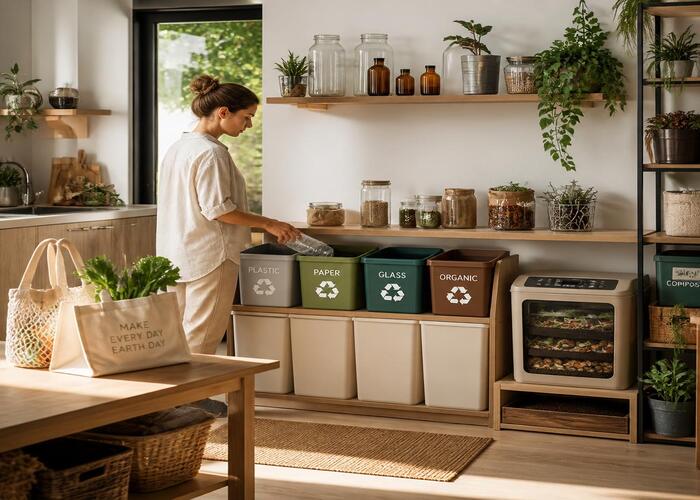
Setting up a recycling system at home makes waste separation easier and more efficient.
A basic system can include:
- Separate bins for paper, plastic, glass, and organic waste
- Clear labeling for each category
- Regular collection and sorting routine
This helps ensure that recyclable materials are properly processed.
The Role of Awareness and Education
Many people are still unaware of proper waste management practices. Education plays a key role in changing behavior and encouraging responsible consumption.
Organizations like Green Home help raise awareness about sustainability and provide guidance on eco-friendly habits. Through education, communities can learn how to reduce their environmental footprint effectively.
Economic and Environmental Benefits
Waste reduction is not only good for the environment but also has financial benefits.
Households can save money by:
- Buying less unnecessary products
- Reusing items instead of replacing them
- Reducing waste disposal costs
Environmentally, it helps reduce pollution, conserve resources, and protect ecosystems.
Conclusion
Waste reduction and recycling are essential components of sustainable living. By adopting simple habits such as reducing consumption, reusing materials, recycling properly, and composting organic waste, every household can make a meaningful contribution to environmental protection.
A cleaner planet begins at home, and every small action counts toward a more sustainable future.